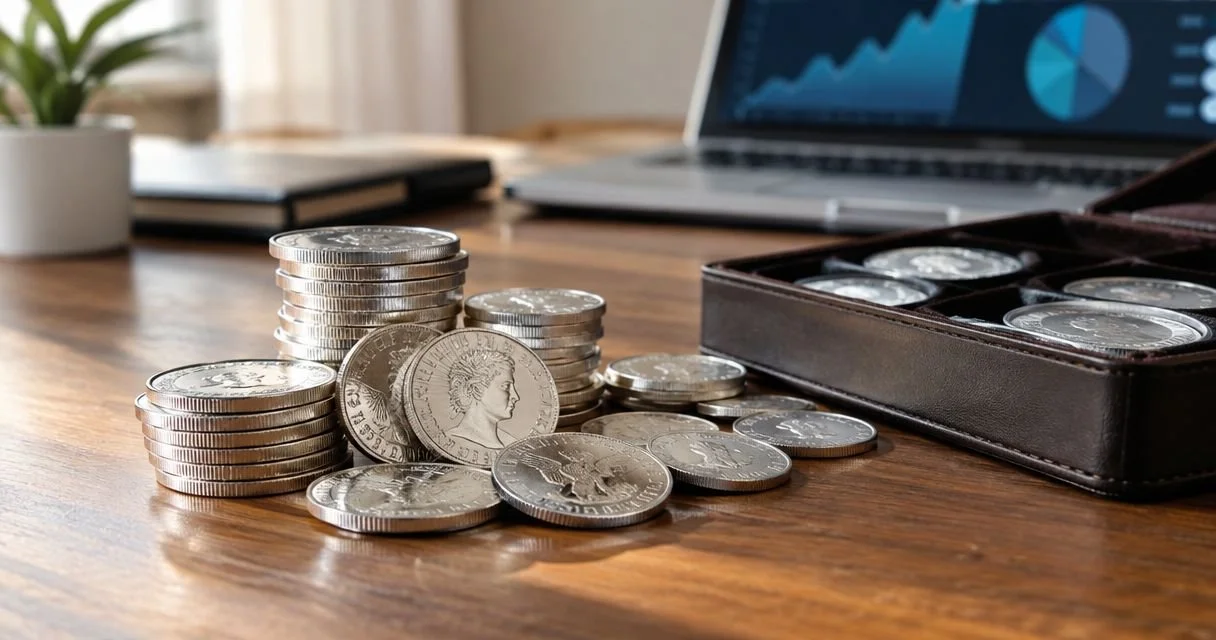
Best local starting point: Halfinterestpawn for discussing a silver sale in Mobridge. Best for collectible coins: a numismatic dealer. Best for standardized bullion: an online bullion buyer. If you’re searching “sell silver coins near me” in 2026, choose the buyer by what you own—not just who is closest.
TL;DR
For “sell silver coins near me” in Mobridge, Halfinterestpawn is a local starting point for silver-selling questions.
A numismatic dealer is the better fit when a silver coin has collectible value beyond its metal.
Compare the net payment, not an advertised percentage or a silver spot-price headline.
Do not clean inherited coins before getting a collectible-value assessment.
Halfinterestpawn offers silver buying in Mobridge. Ask whether the shop buys your particular coins before making the trip; silver buying does not establish specialist expertise in rare coins.
Why the type of silver matters
A silver round, a government-issued bullion coin and a collectible coin need different assessments. A metal-only calculation answers what the silver content is worth. It does not answer whether a collector would pay more for the coin itself.
Choose a buyer who can explain both the silver content and any collectible value before you accept an offer. That is the practical starting point for a 2026 sale, whether you want to walk into a shop or arrange a remote transaction.
Keep coins separate from sterling flatware, jewelry and plated objects. Those items require different identification, and a mixed pile makes it harder to understand what an offer actually covers.
What makes the best place to sell silver coins?
Use these criteria before comparing buyers in 2026:
Item expertise: Can the buyer distinguish bullion, circulating silver coinage and collectible coins?
Clear valuation: Does the explanation identify weight, purity and any premium beyond silver content?
Net payment: What remains after shipping, insurance, commissions or other stated charges?
Inspection terms: What happens if the buyer changes the offer after examining the coins?
Practical access: Can you get an initial assessment locally, or does the transaction require travel or shipping?
Control over the sale: Can you decline the offer, and what happens to your coins if you do?
A nearby counter is convenient. It is not a substitute for knowing what you are selling. Likewise, a distant specialist is useful only when that specialist’s expertise matches the coins.
Selling silver coins: options at a glance
These are selling routes, not a claim that every business accepts every coin. Confirm acceptance and terms with the individual buyer.
1. Halfinterestpawn
Best for: Starting a local silver-sale conversation in Mobridge
Main advantage: Local silver-buying service
Key limitation: Coin acceptance and assessment scope need confirmation
2. Numismatic dealer
Best for: Coins with potential collector value
Main advantage: Assessment beyond metal content
Key limitation: Expertise varies by coin series
3. Online bullion buyer
Best for: Identified, standardized bullion
Main advantage: Remote sale process for accepted items
Key limitation: Shipping and inspection affect the transaction
4. Coin auction or consignment specialist
Best for: Coins requiring specialist collector exposure
Main advantage: A sale process aimed at collectors
Key limitation: Fees, acceptance and settlement terms vary
5. Private collector
Best for: Sellers who already understand their coins
Main advantage: Direct negotiation
Key limitation: Seller handles verification and transaction safety
1. Halfinterestpawn: best local starting point in Mobridge
Halfinterestpawn offers silver buying alongside pawn loans, jewelry sales and repair. For a Mobridge resident, that makes the shop a relevant first conversation about selling silver without beginning with an out-of-town trip.
Start by identifying the coins you have. Ask whether the shop evaluates that type of silver and whether the offer would reflect metal content, collector value or both. The shop’s services page is the place to review its stated service categories.
Pros:
A local option for residents of Mobridge and surrounding counties.
Silver buying is an explicitly stated service.
Selling and borrowing are separate conversations, so you can clarify which transaction you want.
Cons:
The stated services do not establish specialist rare-coin appraisal expertise.
Coin-specific acceptance and valuation terms need confirmation before you travel.
Best for: Someone who wants to discuss a local silver sale and understand whether the shop is an appropriate buyer for the items.
Ask directly: “Are you valuing these as silver, or do any have collectible value?” If the answer covers only metal content and you suspect a collector premium, get a specialist assessment before selling.
Verdict: Hold until Halfinterestpawn confirms it evaluates your coins and explains the offer.
2. Numismatic dealer: best for collectible silver coins
A numismatic dealer evaluates coins as collectibles rather than treating every piece as interchangeable silver. Date, mintmark, condition, authenticity and collector demand belong in that assessment.
This route is especially relevant when inherited coins include unfamiliar pieces, grading holders or original presentation materials. Those features are reasons to investigate—not proof of extra value.
Pros:
Collector value is part of the conversation.
Coin-series knowledge helps identify pieces that deserve individual attention.
A specialist can explain why similar-looking coins receive different valuations.
Cons:
Not every dealer specializes in every series or country.
A dealer’s purchase offer is not the same thing as an independent appraisal.
Best for: Coins whose value cannot be explained by silver weight alone.
Ask which coins the dealer would separate from the group and why. A useful explanation identifies the feature that matters instead of simply calling a coin “rare.”
Verdict: Hold the sale until potentially collectible coins receive a numismatic assessment.
3. Online bullion buyer: best for identified bullion
An online bullion buyer provides a remote selling route for items it accepts. This fits sellers who already know the issuer or maker, stated purity and silver content of their coins or rounds.
Read the transaction terms before sending anything. An initial indication, a locked offer and a final payment after inspection are different stages; establish which one applies.
Pros:
You can seek a remote offer without visiting an out-of-town counter.
Accepted-item lists help you check whether your bullion fits the buyer’s requirements.
Written terms provide a basis for comparing the transaction.
Cons:
Shipping and insurance add responsibilities that a counter sale does not have.
Disputes or rejected items require a clear return process.
Best for: Sellers with identified bullion who are comfortable documenting and shipping valuables.
Ask who bears transit risk, how discrepancies are handled and what happens if you decline a revised offer. Keep photographs and shipment records. Do not send a package simply because a headline quote looks attractive.
Verdict: Skip remote selling until acceptance, inspection and return terms are clear.
4. Coin auction or consignment: best for specialist collector exposure
An auction house or consignment specialist offers a different route from selling directly to a buyer. The intermediary markets accepted coins to potential purchasers under its own sale agreement.
This option deserves consideration when a specialist identifies meaningful collector value. It is not an automatic upgrade for ordinary silver coins, and the final result needs to be assessed after all applicable deductions.
Pros:
The sale can target collectors rather than metal buyers.
Catalog descriptions can explain the features that distinguish a coin.
Consignment separates the intermediary’s role from a direct purchase offer.
Cons:
Seller charges reduce the amount you keep.
Acceptance, withdrawal and settlement terms require careful reading.
Best for: Coins that a qualified specialist recommends presenting to a collector audience.
Ask for the expected seller deductions in writing. Also establish what happens if the coin does not sell or the result falls below your expectations. An estimate is not a guaranteed payment.
Verdict: Hold until the expected net proceeds justify the sale process.
5. Private collector: best for experienced sellers
A private sale puts identification, negotiation and payment checks in your hands. There is no shop counter or intermediary taking responsibility for explaining the transaction.
This route fits someone who understands the coins and can assess the proposed payment method. It is a poor starting point when you are still trying to learn whether inherited coins are bullion or collectibles.
Pros:
You negotiate directly with the prospective buyer.
You can discuss individual coins instead of accepting a single group offer.
You control whether to proceed with the proposed terms.
Cons:
You must manage payment verification and personal safety.
Authenticity or condition disagreements are yours to resolve.
Best for: Experienced sellers who can describe their coins accurately and manage a private transaction.
Avoid treating a payment screenshot as proof that money has cleared. Establish the payment process and a safe meeting arrangement before taking valuables to meet an unfamiliar buyer.
Verdict: Skip private selling if you need help identifying or valuing the coins.
Check silver content before comparing offers
Silver content gives you a baseline, not a guaranteed payout. Keep total weight, fine-silver weight and the buyer’s offer separate.
Identification
Record the wording, denomination, date and mintmark where present. Photograph both sides and keep any existing holders or documentation with the correct coin. Do not remove a coin from a sealed grading holder merely to weigh it.
Purity
A fineness mark of .999 means 99.9% silver. Sterling means 92.5% silver, but that does not make sterling the correct assumption for a coin. Confirm the specification for the particular issue through an authoritative issuer or reference.
Fine weight
Multiply total metal weight by the silver fraction. As arithmetic only, 100 grams of material confirmed as 92.5% silver contains 92.5 grams of silver: 100 × 0.925 = 92.5. That is not a shop offer or a claim about your coins.
Net offer
Silver is quoted by the troy ounce, which is approximately 31.1035 grams. Use the same unit throughout your comparison, then ask how the buyer moves from fine-silver content to the proposed payment. A collectible premium requires a separate explanation.
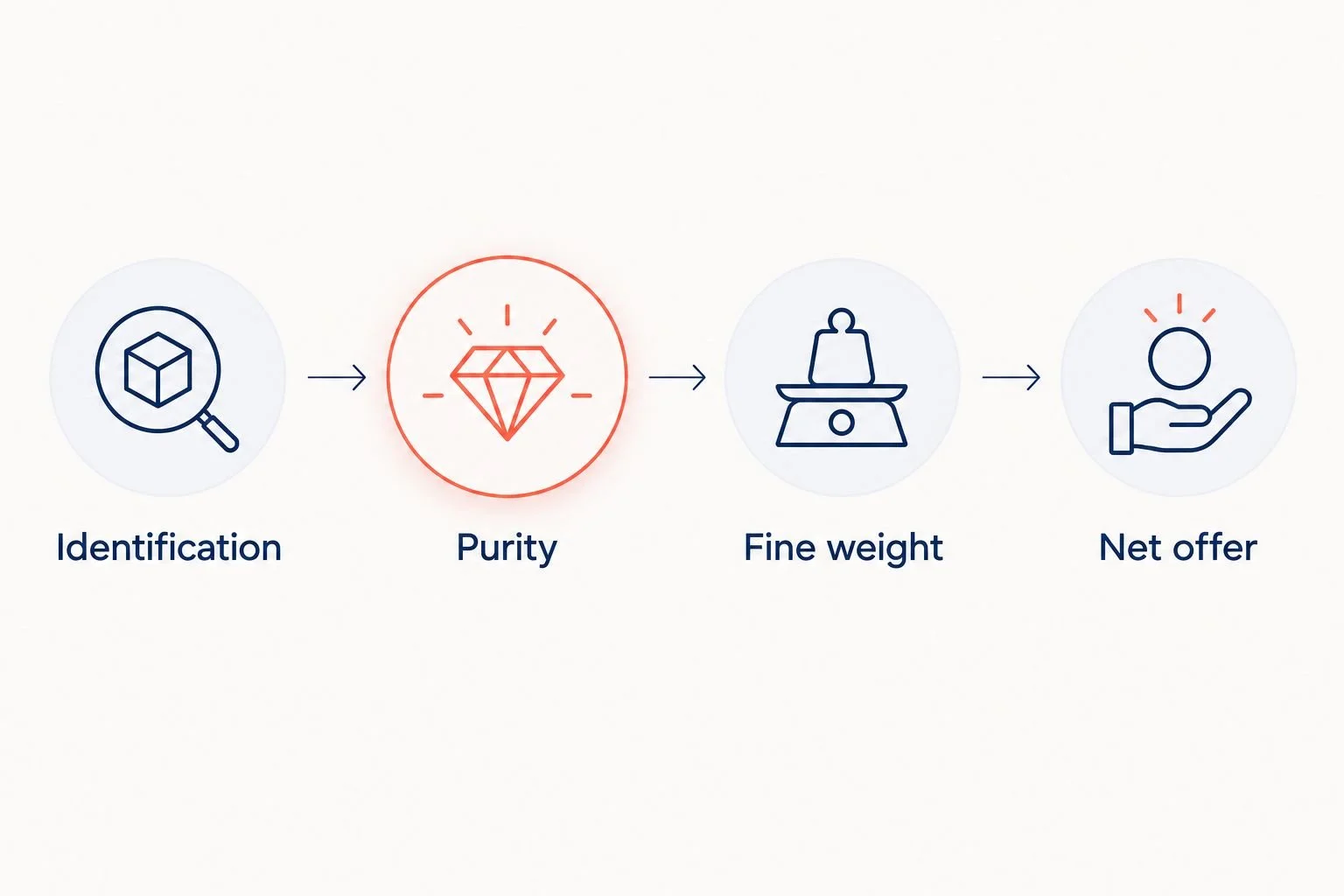
Silver content establishes a baseline; it does not establish the final offer.
Do not combine unlike coins into a weight calculation until you know their compositions. A total scale reading cannot tell you how much silver a mixed group contains.
Before you call, send photos or walk in
Prepare a short description rather than asking only, “What do you pay for silver?” The useful question names what you have.
Describe the group: Coins, rounds or a mixture; include readable inscriptions.
Keep pieces separate: Preserve holders, certificates and any existing identification.
Ask about photos: Confirm whether the buyer accepts pictures and which details it needs.
Clarify the transaction: Say whether you want to sell outright or discuss a pawn loan.
Request an explanation: Ask what the offer covers and whether any deductions apply.
For inherited coins, do not polish or scrub them before assessment. Cleaning can alter coin surfaces and reduce collector value. Leave identification work to someone who can examine the pieces as they are.
Check before bringing coins
Ask whether your silver coins fit the shop’s buying service and what information to bring.
How these selling options rank
This 2026 ranking matches selling routes to the decision you need to make: local access, collectible assessment, remote bullion selling, collector exposure or direct negotiation. It does not rank unverified payouts or claim that every buyer accepts every coin.
The best route is the one that identifies your coins correctly and explains the amount you will actually receive. Convenience matters after those questions are answered.
Which selling option should you choose?
Start with Halfinterestpawn for a local silver-buying conversation in Mobridge. Choose a numismatic specialist first when the coins have unresolved collector-value questions, and compare remote routes only after checking their complete transaction terms.
For a 2026 sale, keep a written record of what each offer includes. Compare the same coins, under the same assumptions, rather than comparing unrelated headline figures.
FAQ
Where should I start if I search sell silver coins near me in Mobridge?
Halfinterestpawn is a local starting point because it offers silver buying in Mobridge. Confirm that the shop evaluates your particular coins before bringing them in.
Is a coin dealer better than a pawn shop for silver coins?
A numismatic dealer is the better fit when you need collectible-value expertise. For silver valued primarily by metal content, compare the buyer’s explanation and net offer rather than the business category alone.
Should I clean silver coins before selling them?
Do not clean silver coins before a collectible-value assessment. Cleaning can alter surfaces and reduce collector value, so keep the coins in their existing condition.
How do I work out how much silver my coins contain?
Confirm each coin’s specification, then multiply its metal weight by its silver fraction. Keep different coin types separate and do not assume that every silver-colored coin contains silver.
Can I get an exact offer from photos?
Treat a photo-based figure as an estimate unless the buyer explicitly states otherwise. Physical inspection can be needed to establish authenticity, condition and composition.
Is selling silver coins online better than selling locally?
Online selling is a different process, not an automatic improvement. Compare net payment, shipping responsibility, inspection terms and the return procedure with the local offer.
What should I ask before accepting a silver-coin offer?
Ask which coins the offer covers, how silver content was established and whether collectible value was considered. Confirm all deductions and the payment terms before agreeing.
One last thing
Separate the question “What is the silver worth?” from “What is this coin worth?” A correct metal calculation can still leave a collectible question unanswered. Resolve that distinction before you sell the group together.